On the occasion of the XXV Winter Olympic Games Milano Cortina 2026, taking place from 6 to 22 February 2026, the CONI – the Italian National Olympic Committee – will be present in the Olympic host cities of Milano, Livigno, and Cortina d’Ampezzo with Casa Italia, a hospitality space and privileged gateway to the excellence of Italy.
Traditionally the home of athletes and the focal point of sporting celebrations, Casa Italia opens to the public for the first time, transforming into a space for encounter and exchange dedicated to narrating Olympic Italy and the culture of sport. Through culture, innovation, and tradition, the project brings to life an integrated system of spaces and content: an immersive journey at the heart of the Games that promotes Italy’s cultural, artistic, and human heritage on the international stage through art, architecture, design, and gastronomy. For this extraordinary occasion, CONI has chosen for Casa Italia Milano Cortina 2026 the theme MUSA, a tribute to the inspirational role Italy has played for centuries in shaping the global imagination and cultural landscape—a reference to the beauty, history, and creativity that make Italy a global point of reference.
Traditionally, the Muses—protectors of the arts, including athletic arts—are the guardians of memory and the inspirers and protectors of human knowledge. In classical mythology, they accompanied the gods believed to watch over the physical education and spiritual formation of youth.
The Muses are the nine daughters of Zeus and Mnemosyne, goddess of memory, born after the father of the gods established a new order in the world through his victory over the Titans. The Muses are thus the eternal guardians of harmony triumphing over chaos, through the innovative power of the arts joined with memory of the past. Perhaps for this reason they are the only divinities, alongside Zeus, to be called Olympian.
Symbolically, for the ancient Greeks the Muses represented the phenomenon of inspiration—that moment of access to a flash of genius, an intuition capable of transforming ourselves, history, and the world around us. The concept of inspiration has remained unchanged across historical eras: from Greek mythology to the Romantic theorist and Nobel laureate William Butler Yeats, inspiration has always been regarded as a mystery, the result of a sudden, almost magical process. Only with the advent of psychology did figures such as Freud and Jung offer interpretations rooted in inner psychic conflict, while materialist philosophers viewed it as a symptom of economic infrastructures in ideological tension.
What Casa Italia seeks to emphasize is Italy’s capacity to become a Muse—a source of inspiration—for some of the most important minds in international culture, who, through visiting the country, allowed themselves to be permeated by it, reshaping the way they perceived the world. Italy, with a territory so diverse that it ranks second only to Brazil in biodiversity; with a geographical position that at times evokes Northern Europe and at others Africa; with a history of rulers and ruled that has enriched it with stories and monuments of inestimable value; with its diverse humanity and complex customs—becomes a participant in that magical process we call inspiration.
For this reason, Casa Italia has been conceived as a narrative told through the voices of foreigners who have found within Italy’s geological, geographical, cultural, linguistic, culinary, and even climatic complexity the encyclopedic essence of a nation capable of gathering, safeguarding, and enhancing diversity—one of the highest values upheld by the Olympic Movement.
Each Muse is represented by an iconic Olympic object from the collection of the Olympic Museum in Lausanne, underscoring that the values expressed throughout the exhibition are shared and amplified through the Olympic Movement itself. Additional key objects from the Museum’s collections form the core of the section dedicated to the ninth Muse, revealing sport—through emblematic artifacts and testimonies—as a source of cultural inspiration, shared memory, and universal language.
When founding the modern Olympic Games, Pierre de Coubertin immediately envisioned the union of art and sport, as in ancient Greece. In an article published in 1904 in Le Figaro, he wrote: “The time has come to establish a new stage and restore the Olympiad to its original beauty. In the days of Olympia’s splendor, literature and the arts, harmoniously combined with sport, ensured the greatness of the Olympic Games. The same must be true in the future.” From the Stockholm Games in 1912 to those of London in 1948, artists competed alongside athletes; later, art exhibitions continued without the awarding of medals. To this day, Olympic Opening Ceremonies remain a form of performative art capable of conveying the universality of the Olympic message and embodying the highest values humanity can express.
With this exhibition, CONI reaffirms the bond envisioned by Pierre de Coubertin at the very foundation of the Olympic Games, placing sport at the center of Parnassus—art among the arts—on the occasion of the Milano Cortina 2026 Olympics.
MUSA represents the culmination of a process initiated in 2016, progressively transforming Casa Italia from a simple Hospitality House into an internationally significant cultural project, capable of narrating Italian culture and the national system through its artistic, design, and ethical excellence.
Edition after edition, Casa Italia has established itself as a representative space where sport, art, design, and architecture engage in an organic dialogue: at Rio 2016, with Horizontal, it introduced the theme of cultural cross-pollination; at PyeongChang 2018, with Prospectum, it reflected on the Italian point of view in intercultural dialogue; at Tokyo 2020, with Mirabilia, it celebrated wonder as a distinctive trait of Italian craftsmanship; at Beijing 2022, with Millium, it developed the theme of the journey as a metaphor for growth and transformation; and at Paris 2024, with Ensemble, it foregrounded harmony and dialogue among languages, disciplines, and people, interpreting the Olympic spirit as a collective and choral experience.
With Milano Cortina 2026, Casa Italia finally arrives in Italy and, through MUSA, marks the completion of a decade-long journey, consolidating its role as a cultural and institutional platform complementary to sport and projected onto the international stage.
A single project unfolds across three venues — Triennale Milano, the Centro di Preparazione Olimpica Aquagranda, and Farsettiarte — generating environments and emotional experiences in profound dialogue with one another.
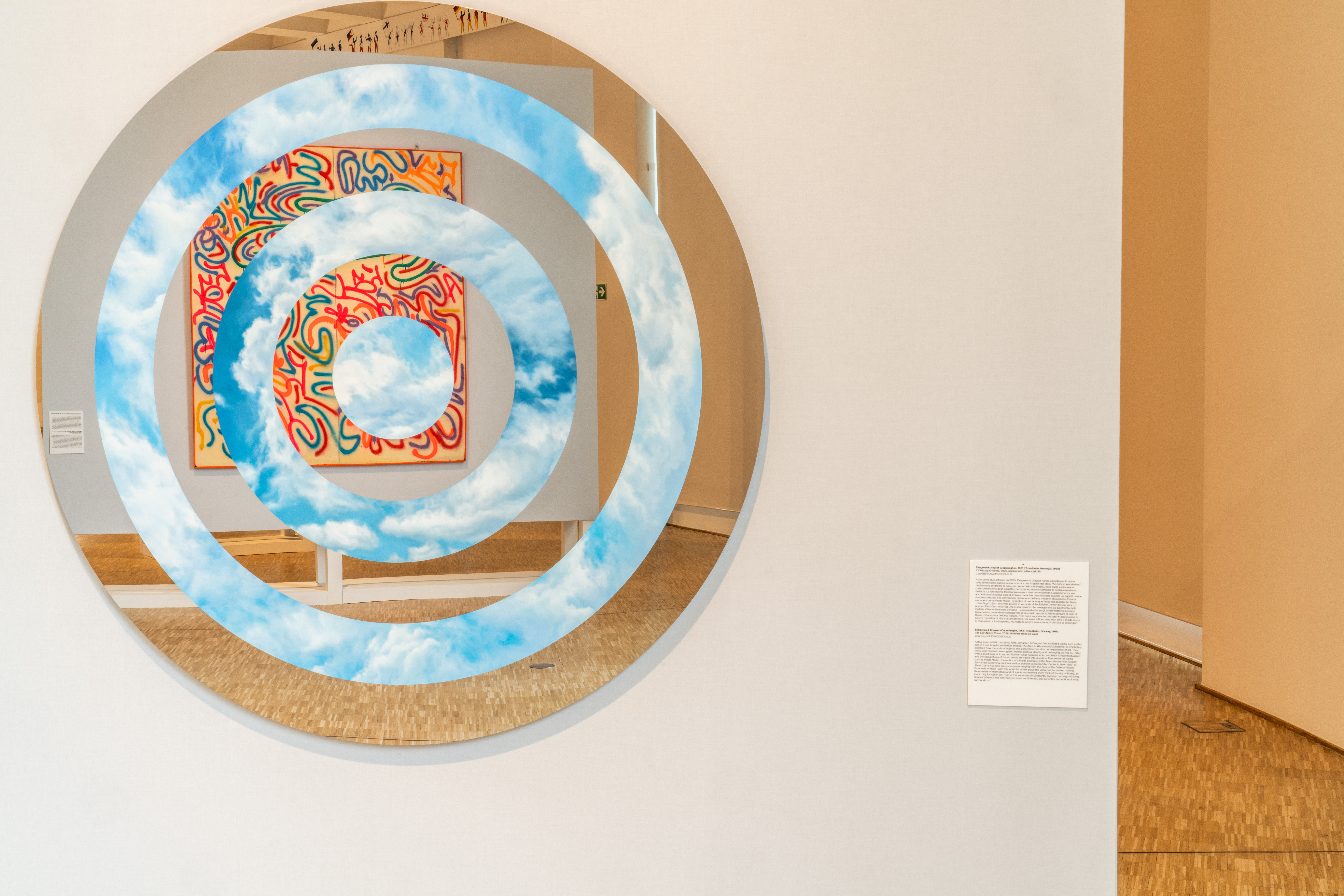
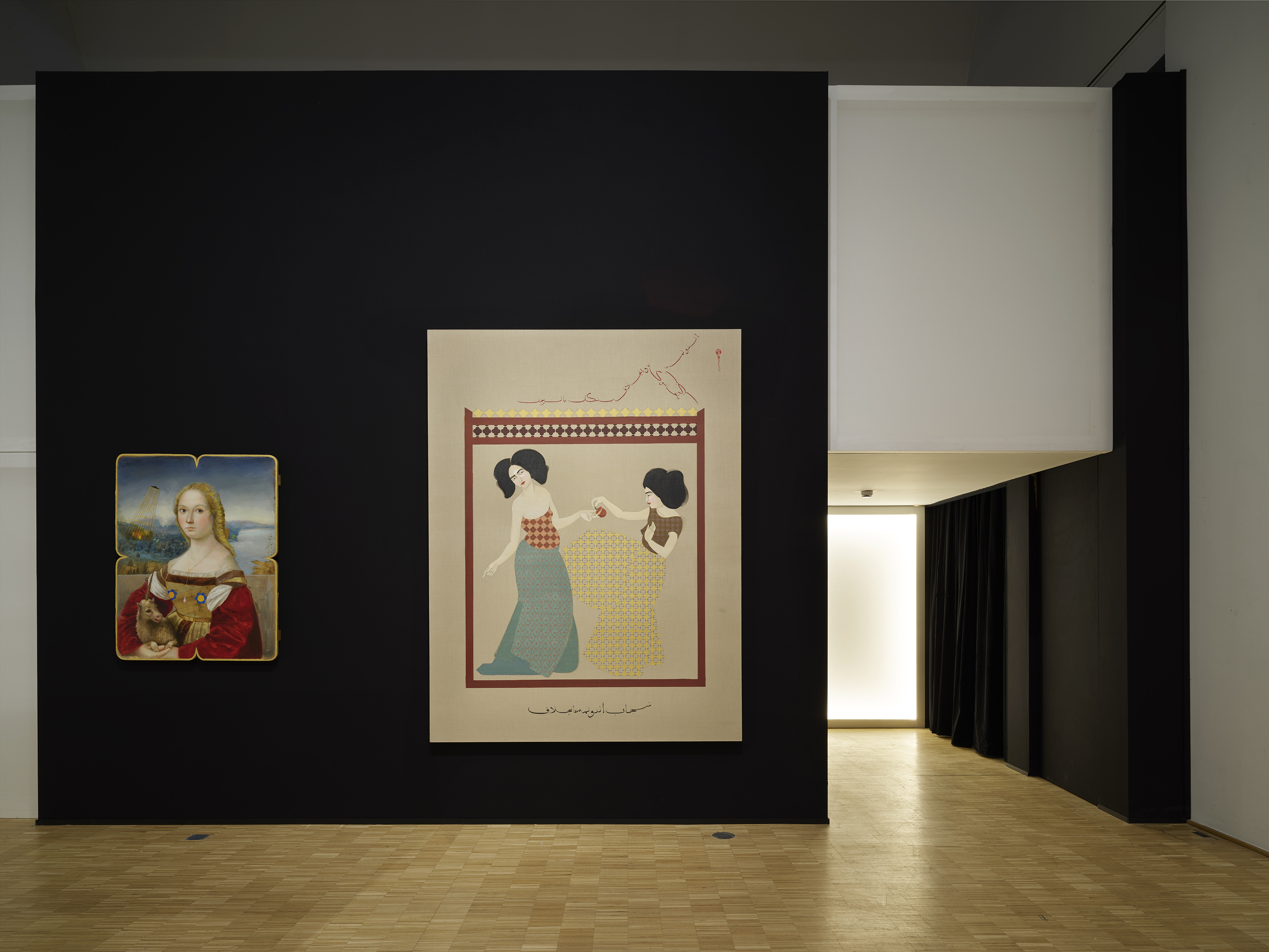
Within these spaces, conceived as true exhibition projects, works by Claudio Abate, Camilla Alberti, Juan Araujo, Arman, John Armleder, Pablo Atchugarry, Atelier dell’Errore, Matteo Attruia, Giacomo Balla, Per Barclay, Giulio Bensasson, Ruth Beraha, Jessie Boswell, Fernando Botero, Stefano Cerio, Massimo Campigli, Luca Campigotto, Mario Ceroli, César, Christo and Jeanne-Claude, Giorgio de Chirico, Filippo de Pisis, Tristano di Robilant, Binta Diaw, Ifeyinwa Joy Chiamonwu, Elmgreen & Dragset, Slawomir Elsner, Bekhbaatar Enkhtur, Elger Esser, Chung Eun-Mo, Jean Fautrier, Gelitin, Piero Gemelli, John Giorno, Itamar Gov, Wang Haiyang, Keith Haring & L.A.II, James Hillman, Craigie Horsfield, Bryan Hunt, Carlos Idun-Tawiah, JR, Hayv Kahraman, William Kentridge, Jirí Kolář, Joseph Kosuth, Jannis Kounellis, Susanne Kutter, Sol LeWitt, Miltos Manetas, Roberto Sebastián Antonio Matta Echaurren, Giulia Mangoni, Gerhard Merz, Mario Merz, Jonathan Monk, Davide Monteleone, Vik Muniz, Shirin Neshat, Hermann Nitsch, Denis Oppenheim, Adrian Paci, Park EunSun, Yan Pei-Ming, Alejandra Varela Perera, Alessandro Piangiamore, Laura Pugno, Robert Rauschenberg, Davide Rivalta, Ugo Rondinone, Ottone Rosai, Anri Sala, Eva Sajovic, Mario Schifano, Daniel Spoerri, Thomas Struth, Hiroshi Sugimoto, Newsha Tavakolian, David Tremlett, Lihi Turjeman, Tursic & Mille, Cy Twombly, Ben Vautier, Ai Weiwei, Uwe Wittwer, and Sislej Xhafa take center stage.